
Trading Signals Quick Start
Master trading signals with Exness in South Africa. Access real-time forex signals, automated alerts, and proven strategies for profitable trades.
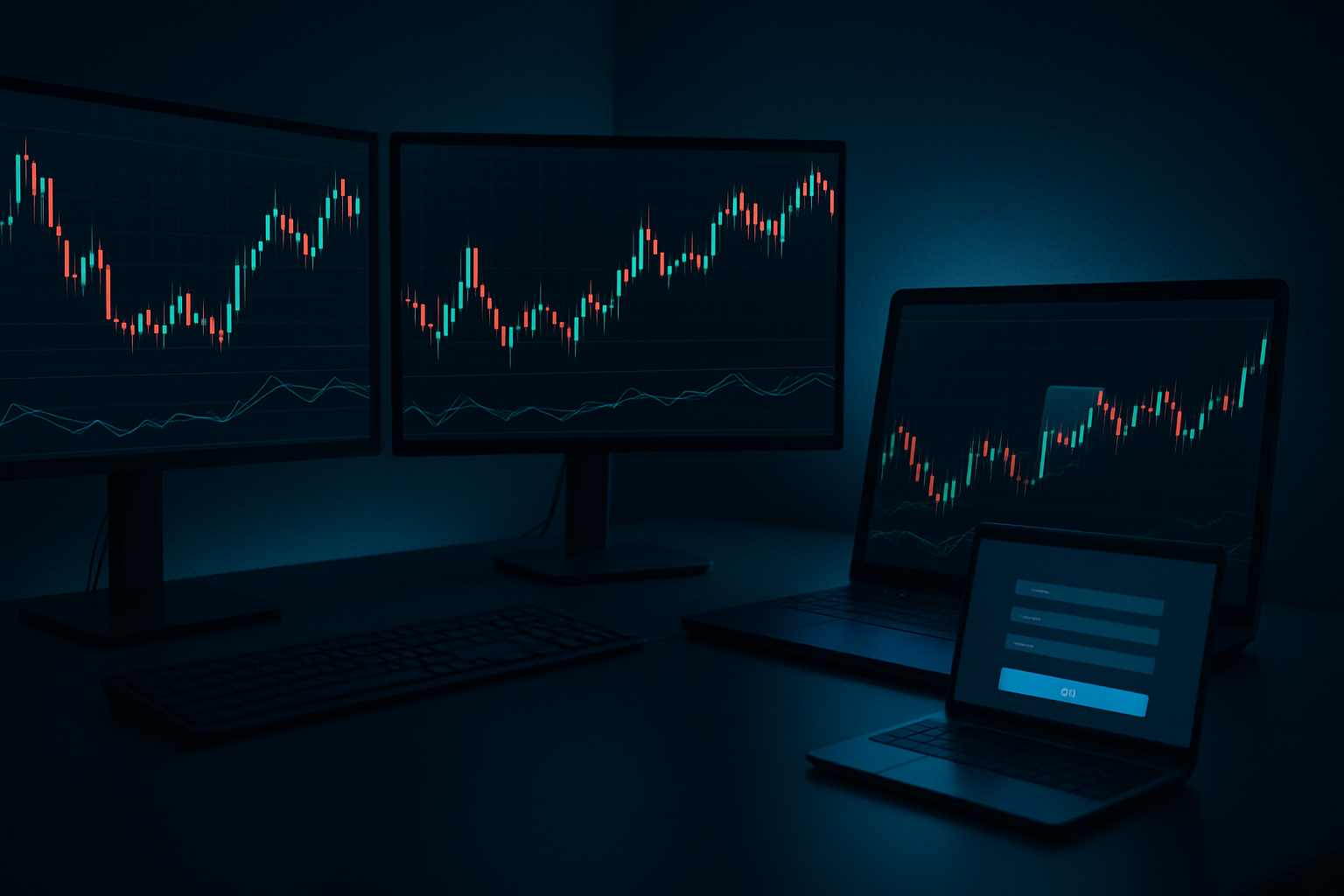
Fast Signal Delivery with Exness Platform Integration
Our MetaTrader 4 and MetaTrader 5 platforms seamlessly integrate trading signals directly into your trading interface, eliminating delays between signal generation and execution. Signal providers transmit recommendations through multiple channels including push notifications, email alerts, and SMS messages, ensuring you receive critical market information regardless of your location or device preference.
The signal delivery system operates through automated Expert Advisors that scan market conditions continuously, identifying opportunities based on technical indicators like MACD crossovers, RSI divergence, and support/resistance breakouts. When predetermined criteria align, the system generates signals containing entry price, stop-loss level, and multiple take-profit targets, typically delivered within seconds of market condition changes.
| Signal Delivery Method | Response Time | Reliability | Best For |
|---|---|---|---|
| Push Notifications | 1-3 seconds | 99.5% | Active traders |
| Email Alerts | 10-30 seconds | 98% | Desktop monitoring |
| SMS Messages | 5-15 seconds | 97% | Mobile traders |
| Platform Integration | Instant | 99.8% | Automated execution |
Professional signal providers utilize advanced algorithms that process multiple timeframes simultaneously, from 1-minute scalping opportunities to daily swing trade setups. The system analyzes price action patterns, volume indicators, and momentum oscillators to generate high-probability trade recommendations across major forex pairs, commodities, and indices available through our platform.
Win More with Technical Analysis Signal Types
Technical analysis signals form the foundation of most profitable trading strategies, utilizing mathematical calculations and chart pattern recognition to predict price movements. Manual signals created by experienced analysts combine multiple technical indicators with market sentiment analysis, providing detailed explanations for each trade recommendation including the underlying market logic and risk assessment.
Automated signals generated through algorithmic systems process vast amounts of market data instantaneously, identifying patterns that human analysts might overlook during volatile market conditions. These systems employ machine learning algorithms that adapt to changing market conditions, continuously refining signal accuracy based on historical performance data and current market dynamics.
- Trend Following Signals: Identify momentum continuation patterns using moving average crossovers and trend line breaks
- Reversal Signals: Detect potential market turning points through divergence patterns and overbought/oversold conditions
- Breakout Signals: Capture explosive price movements when key support or resistance levels fail
- Scalping Signals: Target small price movements within tight timeframes for quick profit accumulation
Preliminary warning signals provide early market hints before major price movements occur, allowing traders to position themselves advantageously before trend confirmation. These signals often appear as divergence patterns between price action and momentum indicators, giving skilled traders advance notice of potential market shifts.
Maximize Profits with Signal Provider Selection
Selecting reliable signal providers requires thorough evaluation of performance metrics, transparency standards, and delivery consistency. Reputable providers publish detailed trading histories including win rates, average pip gains, maximum drawdown periods, and risk-reward ratios, allowing traders to assess performance objectively before committing capital to signal recommendations.
Provider credibility stems from regulatory compliance, transparent fee structures, and consistent communication with subscribers. Top-tier signal services maintain detailed performance records spanning multiple market conditions, demonstrating adaptability during both trending and ranging market environments while maintaining reasonable risk management protocols.
| Provider Type | Win Rate Range | Signals Per Day | Monthly Cost | Risk Level |
|---|---|---|---|---|
| Professional Analysts | 65-75% | 3-8 | $50-200 | Medium |
| Algorithmic Systems | 70-80% | 10-25 | $30-150 | Low-Medium |
| Copy Trading Platforms | 60-70% | Variable | $0-100 | Variable |
| Free Signal Services | 55-65% | 5-15 | Free | High |
Signal provider evaluation extends beyond simple win rates to encompass risk management practices, position sizing recommendations, and market condition adaptability. Quality providers adjust signal frequency and risk parameters based on market volatility, reducing trade frequency during uncertain conditions while increasing activity during clear trending periods.
Exness Signal Integration Features
Our platform connects directly with leading signal providers through API integrations, enabling automatic trade execution based on received recommendations. This integration eliminates manual order placement delays while maintaining full control over position sizing, risk parameters, and trade modifications according to individual risk tolerance levels.
Signal Performance Tracking Tools
Advanced analytics tools within our trading platform track signal provider performance across multiple metrics including profit factor, Sharpe ratio, and maximum consecutive losses. These comprehensive statistics enable informed decision-making when selecting signal providers and adjusting portfolio allocation based on historical performance data.
Boost Returns with Proper Signal Interpretation
Signal interpretation requires understanding the underlying market analysis that generates each recommendation, including technical indicator readings, chart pattern formations, and fundamental factors influencing price direction. Successful traders combine signal recommendations with personal market analysis, using signals as confirmation tools rather than blind execution triggers.
Entry timing optimization involves analyzing current market conditions against signal recommendations, considering factors like spread costs, market volatility, and upcoming economic announcements that might affect trade outcomes. Professional traders often wait for additional confirmation signals before entering positions, particularly during high-impact news periods or low-liquidity market sessions.
Risk management integration with signal recommendations involves calculating appropriate position sizes based on account balance, risk tolerance, and signal-specific stop-loss levels. Effective traders never risk more than 2-3% of account equity on individual signal-based trades, regardless of signal provider confidence levels or historical accuracy rates.
| Signal Component | Interpretation Method | Action Required | Risk Consideration |
|---|---|---|---|
| Entry Price | Current market level | Place order | Spread impact |
| Stop Loss | Risk management level | Set protection | Maximum loss |
| Take Profit 1 | Conservative target | Partial close | Profit securing |
| Take Profit 2 | Moderate target | Position scaling | Risk adjustment |
| Take Profit 3 | Aggressive target | Final exit | Maximum reward |
Signal validation through multiple timeframe analysis helps confirm trade direction and timing accuracy. Traders examine signal recommendations across 15-minute, 1-hour, and 4-hour charts to ensure alignment between short-term entry signals and longer-term trend direction, reducing the likelihood of counter-trend trades during strong directional movements.
Accelerate Success with Automated Signal Execution
Automated signal execution through Expert Advisors eliminates emotional decision-making and ensures consistent trade implementation according to predefined parameters. Our MetaTrader platforms support sophisticated automation systems that receive signal alerts, verify market conditions, calculate position sizes, and execute trades without manual intervention.
Expert Advisor configuration allows customization of risk parameters, position sizing algorithms, and trade management rules while maintaining compatibility with external signal providers. Advanced automation systems can manage multiple signal sources simultaneously, prioritizing high-confidence trades while filtering out conflicting recommendations during uncertain market conditions.
Trade management automation extends beyond initial order placement to include trailing stop adjustments, partial profit taking at predetermined levels, and position scaling based on trade performance. These sophisticated systems adapt to changing market conditions, tightening stops during volatile periods while allowing profits to run during strong trending movements.
- Signal Reception: Automatic processing of provider recommendations through secure API connections
- Risk Calculation: Dynamic position sizing based on account balance and signal-specific risk parameters
- Order Execution: Instant trade placement with predefined stop-loss and take-profit levels
- Trade Management: Automated adjustments based on market conditions and performance metrics
- Performance Tracking: Comprehensive logging of all automated trades for analysis and optimization
Automated systems require regular monitoring and parameter adjustment to maintain optimal performance across changing market conditions. Successful automation involves backtesting signal strategies across historical data, optimizing parameters for current market volatility, and implementing circuit breakers to prevent excessive losses during adverse market conditions.
Enhance Performance with Risk Management Integration
Risk management integration with trading signals involves calculating appropriate position sizes based on signal-specific stop-loss levels and individual risk tolerance parameters. Professional traders maintain consistent risk exposure across all signal-based trades, typically limiting individual trade risk to 1-2% of total account equity regardless of signal confidence levels or provider recommendations.
Portfolio diversification across multiple signal providers and trading strategies reduces dependency on individual signal sources while maintaining consistent profit potential. Effective risk management involves spreading capital across different market sectors, timeframes, and analysis methodologies to minimize correlation risk during adverse market conditions.
Signal-based risk management extends beyond individual trade parameters to encompass overall portfolio exposure, correlation analysis between active positions, and maximum drawdown limitations. Advanced traders implement position sizing algorithms that adjust trade volumes based on recent performance, reducing exposure after consecutive losses while increasing position sizes during profitable periods.
| Risk Management Tool | Application Method | Benefit | Implementation |
|---|---|---|---|
| Position Sizing | 2% rule per trade | Capital preservation | Automatic calculation |
| Stop Loss Orders | Signal-specific levels | Loss limitation | Mandatory placement |
| Take Profit Scaling | Multiple exit points | Profit optimization | Partial closures |
| Correlation Analysis | Portfolio monitoring | Risk reduction | Regular assessment |
Dynamic risk adjustment based on market volatility involves modifying position sizes and stop-loss levels according to current market conditions. During high-volatility periods, professional traders reduce position sizes while widening stop-loss levels to accommodate increased price fluctuations, maintaining consistent risk exposure despite changing market dynamics.
Our platform provides comprehensive risk management tools including real-time portfolio analysis, correlation monitoring, and automated position sizing calculators that integrate seamlessly with signal-based trading strategies. These tools ensure consistent risk management across all trading activities while maintaining the flexibility to adjust parameters based on individual trading preferences and market conditions.
Expert Advisors and Signal Automation Benefits
Exness Signal Integration Features
Our platform connects directly with leading signal providers through API integrations, enabling automatic trade execution based on received recommendations. This integration eliminates manual order placement delays while maintaining full control over position sizing, risk parameters, and trade modifications according to individual risk tolerance levels.
Signal Performance Tracking Tools
Advanced analytics tools within our trading platform track signal provider performance across multiple metrics including profit factor, Sharpe ratio, and maximum consecutive losses. These comprehensive statistics enable informed decision-making when selecting signal providers and adjusting portfolio allocation based on historical performance data.
Trade Management Automation
Trade management automation extends beyond initial order placement to include trailing stop adjustments, partial profit taking at predetermined levels, and position scaling based on trade performance. These sophisticated systems adapt to changing market conditions, tightening stops during volatile periods while allowing profits to run during strong trending movements.
Risk Calculation and Order Execution
Dynamic position sizing based on account balance and signal-specific risk parameters ensures capital preservation and consistent risk exposure. Instant trade placement with predefined stop-loss and multiple take-profit levels guarantees timely execution of profitable trades.
Performance Tracking and Optimization
Comprehensive logging of all automated trades allows detailed analysis and continuous optimization of signal strategies, ensuring long-term trading success with Exness.
❓ FAQ
What are Exness trading signals?
Exness trading signals are real-time buy and sell recommendations generated by advanced algorithms or professional analysts, designed to help traders identify profitable entry and exit points in forex markets.
How fast are signals delivered on Exness platforms?
Signals are delivered instantly through platform integration, with push notifications arriving within 1-3 seconds, ensuring timely execution for active traders.
Can I automate trading based on Exness signals?
Yes, Exness supports automated signal execution through Expert Advisors that handle trade placement, risk management, and trade modifications without manual intervention.
How do I select the best signal provider?
Evaluate providers based on win rates, risk management, transparency, and consistency. Use Exness analytics tools to track and compare performance before committing.
What risk management tools are available with Exness signals?
Exness offers position sizing calculators, stop-loss order integration, take profit scaling, and portfolio correlation analysis to help manage and minimize trading risks.